How to communicate When Emotionally Dysregulated in ADHD & Autism
Recently I was on instgram, and I saw that @tism.and.cats reached out to ask her collective of fellow Autistic ADHD’ers, how they deal with communication challenges when feeling de-regulated.
As an AuDHD’er and neuro-affirming arts therapist, this experience has come up in my own life MANY times, and so too my clients’! So here is my go-to strategy to suggest/try first for Autistic / ADHD’ers, when you need to communicate with a loved one (or anyone, really), during dysregulated - re-regulated flight-fight moments.
How to communicate When Emotionally Dysregulated in ADHD & Autism
{ GESTURE SEQUENCE }
1. NOTICE: Practice noticing when you’re feeling de-regulated. Sometimes, simply noticing instead of autopilot, can bring some agency back into our experience. What’s happening, is likely an experience or thought has hijacked your brain and nervous system into fight-flight mode. This might feel like a thumping heartbeat, dizziness/lightheadedness, wrenched tummy, panic in the chest area, jaw/shoulder/neck tension.
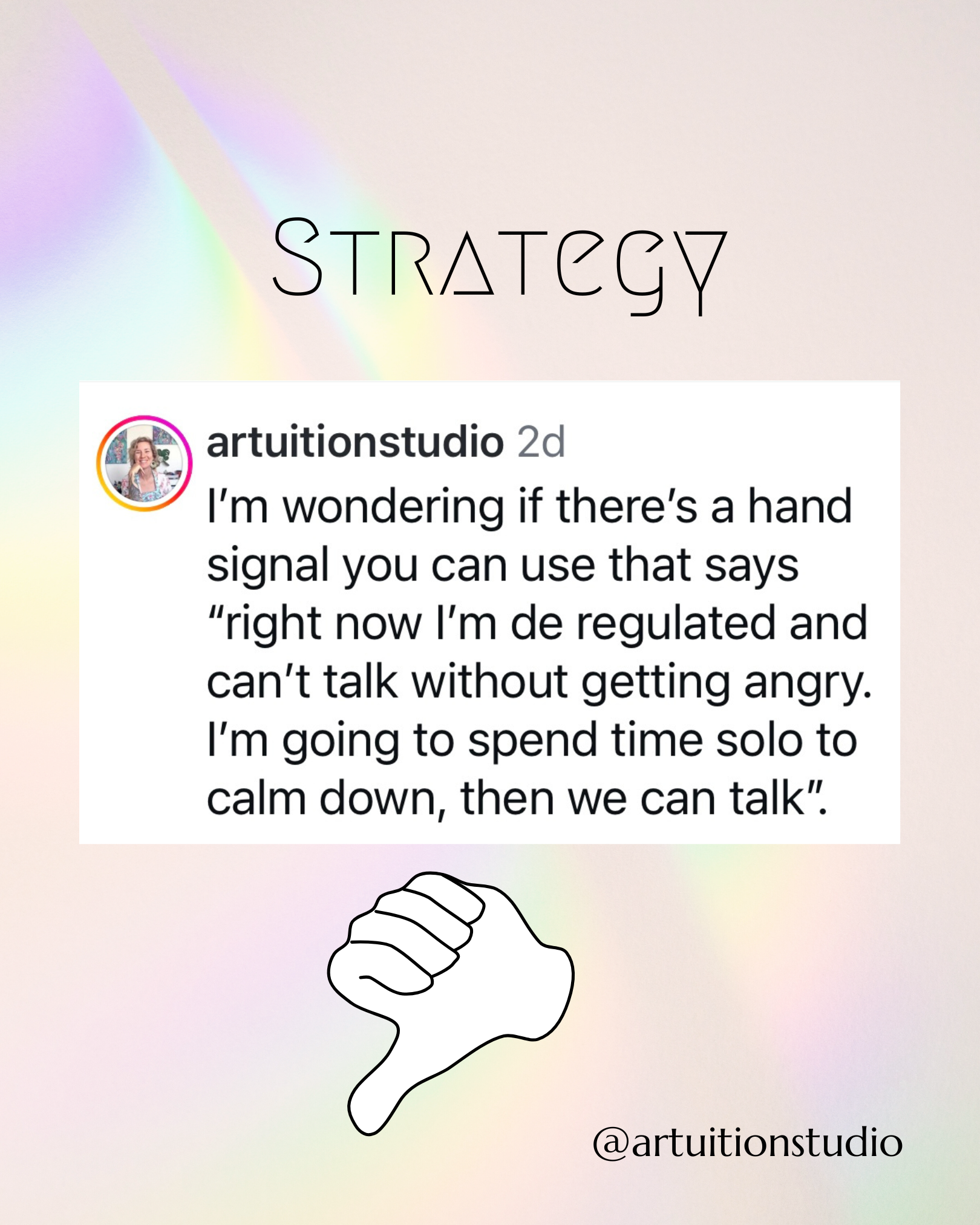
2. USE A HAND SIGNAL/GESTURE: Raise your hand to indicate you need time to process, instead of trying to communicate thoughts and feelings from a de-regulated space. Our words can easily become jumbled, inaccessible or even unintentionally appear spiteful ,when we’re coming from a fight-flight mode and emotional de-regulation state.
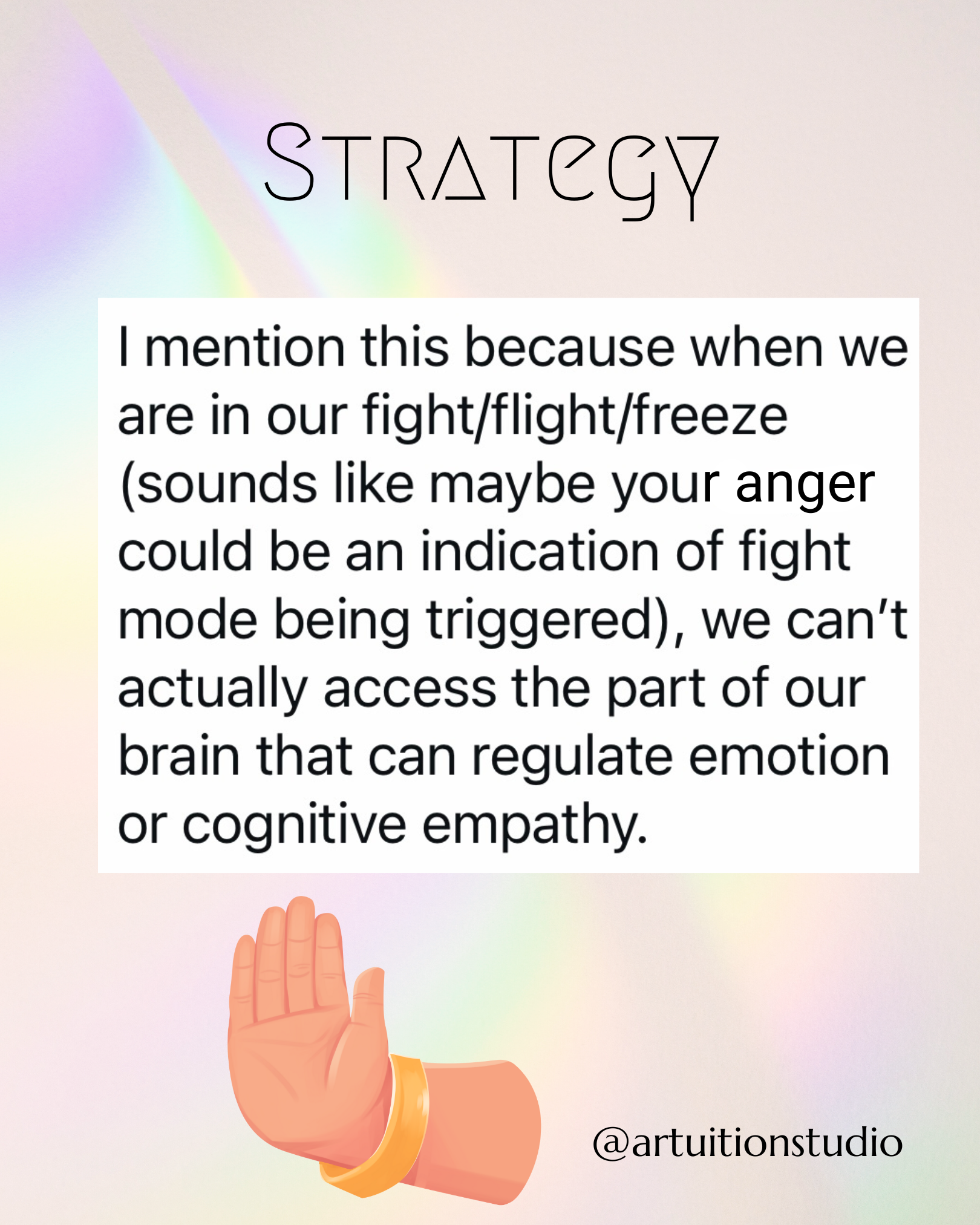
3. PAUSE: Go somewhere safe & take a few, slower breaths here if you can. Slower breathing helps switch on the parasympathetic nervous system, linked to rest and digest, helping our cognitive brain come back online.
Why the gesture sequence works for Autistic ADHD’ers
Communicating with hand gestures, especially when discussed/negotiated ahead of time, can be relational life-savers, enabling us time to come down from an overwhelming state in a safe way (often by ourselves if needed, or via co-regulation with a safe person).
The reason this works is our emotional and verbal brains are immensely impacted in fight-flight situations (many of us may become non-verbal in overwhelming situations), however we may still have access to non -verbal communication methods, like hand gestures.
Trying out the Gesture Sequence (or even just remember “Hands” when feeling overwhelmed) might just be a way to meet our needs in the moment. Then, when we are in a safer and more regulated space (both internally and externally), we may find we can discuss the topic from a calmer perspective, with agency.
I understand this may not be achievable in all situations, as we may be too de-regulated to remember, or we may be around people who aren’t open to neuro-affirming strategies. However, the gesture sequence can be a great tool to practice with our safe people when we are feeling regulated, to start creating strong neural pathways for the process.
Another note on lived experience: Traditional psychotherapy (typically created for for neuro-normies) often swaps around steps 2 and 3 to NOTICE - PAUSE - ACTION. However in my lived experience as a neurodivergent person, it’s too many steps to remember to pause between the noticing and the hand-gesture, especially when I’m dysregulated in a fight-flight moment. Literally, the part of the brain that manages sequencing and executive functioning, is already a challenge for many autistic ADHD’ers. So, we need more direct, body-based alteratives, that work better for our neurotype.
So NOTICE (notice you’re dysregulated) > ACTION (hand gesture) > PAUSE (get to a safe place to breathe) is a simpler and more direct way for us to learn and actually use the gesture sequence.
I hope you find this helpful!
With care and creativity,