⏳How to Deepen a Relationship with Yourself, via Your Senses ✨
Hello, Beauty 🌸✨
One of the recurring themes I notice in my therapeutic creative work with neurodivergent folx, is a desire to deepen the relationship with ourselves, and the world around us.
Sensing is part of being in a human body, and having a human experience. Whether we’re relating to other people, or non-human forms such as plants, pets or plushies; sensing enables us to connect the world we’re in, and how we experience it.
But many of us can be significantly more focussed on deepening our relationships with others, rather than prioritising attuned time with ourselves. Sometimes it’s not until health conditions emerge or mid-life hormonal shifts, (hello, perimenopause!) that we begin to deep dive into our sensory needs, as much as we accommodate others’.
Deepening our sensory awareness helps us gain more agency about our life choices and decisions (especially for neurodivergent folx, with a tendency to mask our sensory needs to appear “normal” within social dynamics).
When we deepen our self-connection via our senses, we can better learn who we are, so we can better know what we really need.
So in this post, I’m going to share some ways we can creatively deepen into our physical senses, so that we can better curate healthy relationships and boundaries for ourselves, and those we share our lives with.
✨ Meaningful Ways to deepen Connection with your Senses 💫
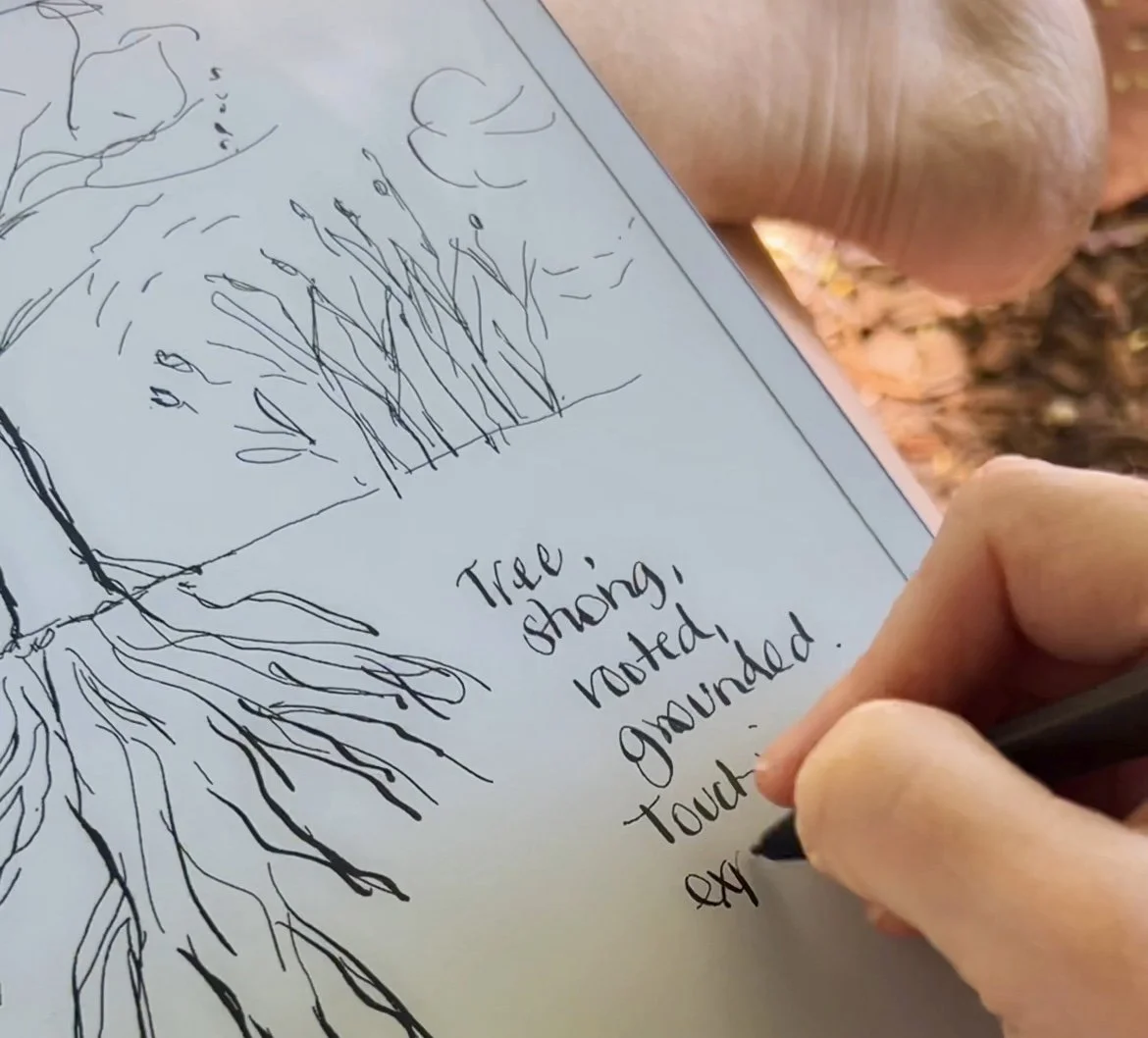
Journaling what and how I sense in nature
✨ How to Mindfully Tune into Your Senses 🌻
We’ve all heard the words ‘mindfulness’ and ‘sensory’ before, but what do they really mean? ‘Mindfulness’ can sound boring, and accessible only to people without busy brains or nervous systems. And ‘Sensory’ often gets lumped with overwhelming aversions we might have, like things that feel icky on our skin!
“In truth:
Mindfully sensing is a nurturing and powerful approach to being in deeper conversation our bodies.”
Learning to tune into our senses gives us important information about how we receive and process the world we’re a part of. It’s also the simplest way to discover what we like and dislike the most, which can be a challenge if we’ve lived a predominantly outwardly focussed life.
To mindfully tune into our senses, we bring the spotlight inside our bodies to inquire, and notice how engaging with the world makes us feel in our bodies. Imagine being an hourglass, clearly perceiving what we see outside the glassy exterior, and sensing into the unique textures and granular moments of sensing feedback, moving through our system ⏳.
Let’s explore some mindful sensory prompts to tune into ourselves, to deepen your self-relationship:
⏿ 1. Mindful Seeing 👀
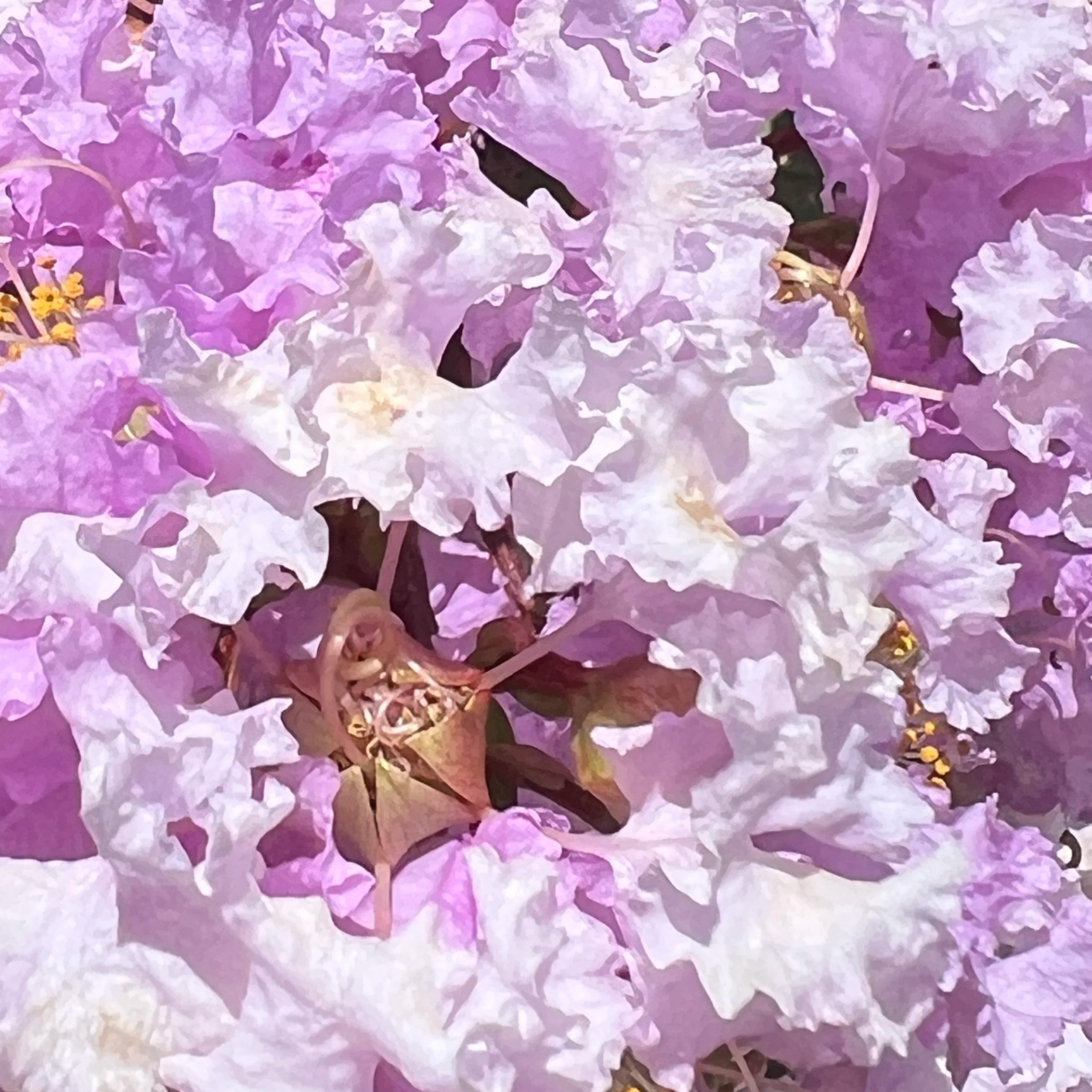
Mindful seeing involves noticing the sensations and insights our eyes communicate to our brain. An easy way to lean into mindful sight, is to notice: What recurring imagery are you naturally drawn to? It might be certain colours, art styles, architecture, fonts, or natural themes such as moss, waterfalls, flowers.
Can you linger here an extra beat when you’re admiring something with your eyes? What happens in your body when you‘re noticing beauty? (I often notice my eyes and heart-space widens to take in all the beauty!✨🌸)
You can discover what you visually dislike (important information for setting boundaries!), by noticing what feels overwhelming to your eyes. For me, it’s flourescent lighting, closed curtains on a sunny day, and muddy greeny-brown paint 🤢.
What’s something visual in the room right now you’re either drawn to, or repelled by?
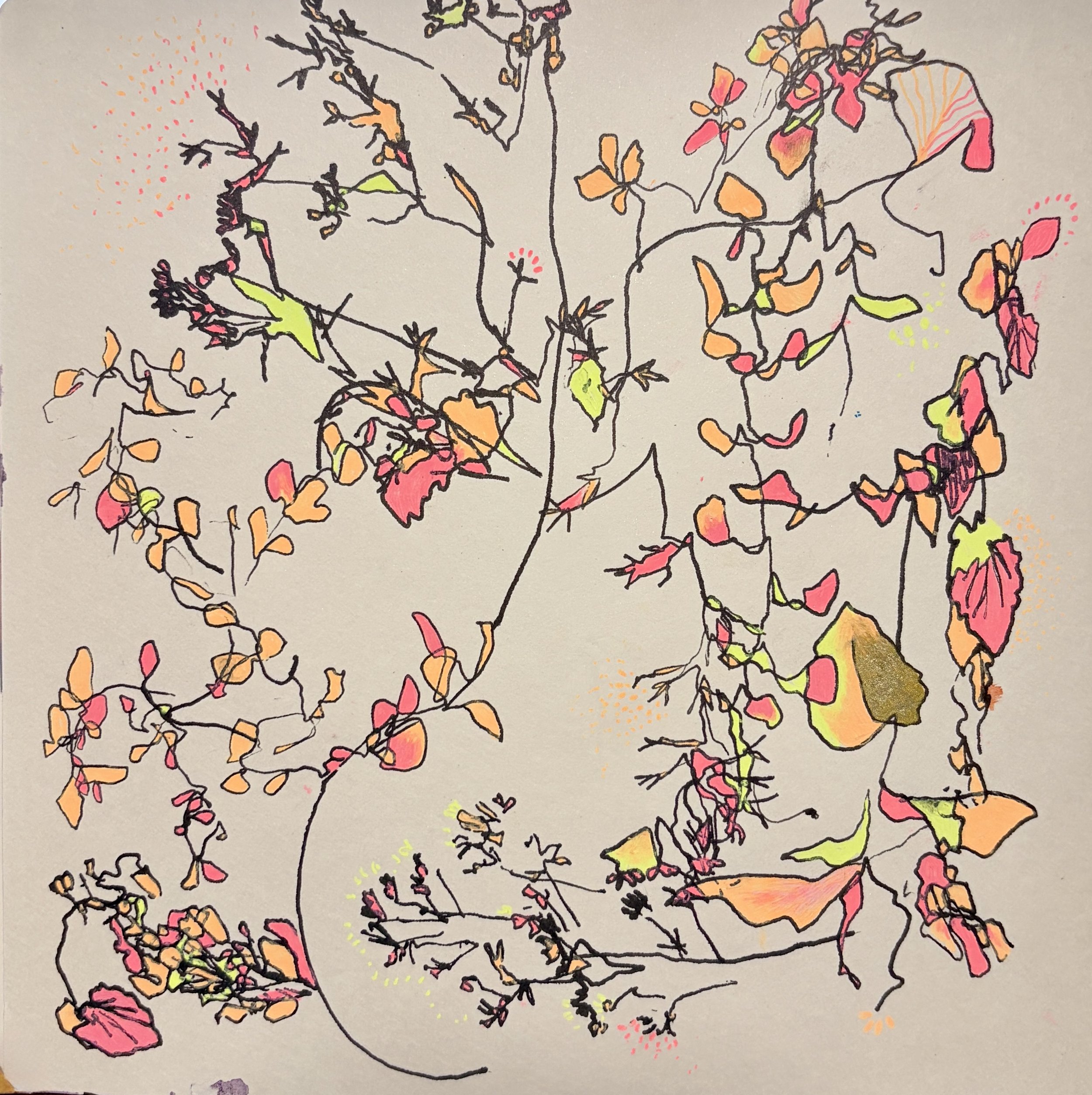
From my journal: Drawing fave plants
🎧 2. Mindful Hearing 🎼
We know that mindfully hearing and listening is a powerful tool for connecting with others, but we can also tune into ourselves.
Which sounds feel innately blissful, invigorating, or calming to you? What happens in your body when you hear your favourite sounds? Do you notice your heart tingle when you hear bird song? Do your shoulders soften when you listen to a babbling brook? Do your hips sway when listening to your favourite tune?
Alternatively, do any sounds feel jarring to you? Perhaps several conversations happening in the room, high pitched noises, or hearing other people chewing might feel overwhelming for you. For me, it’s country music, yelling and squeaky egg cartons or polystyrene.
How does your body tell you if you like or dislike a sound? Do you lean closer to listen more intently, or cover your ears? Notice how sounds affect your body.
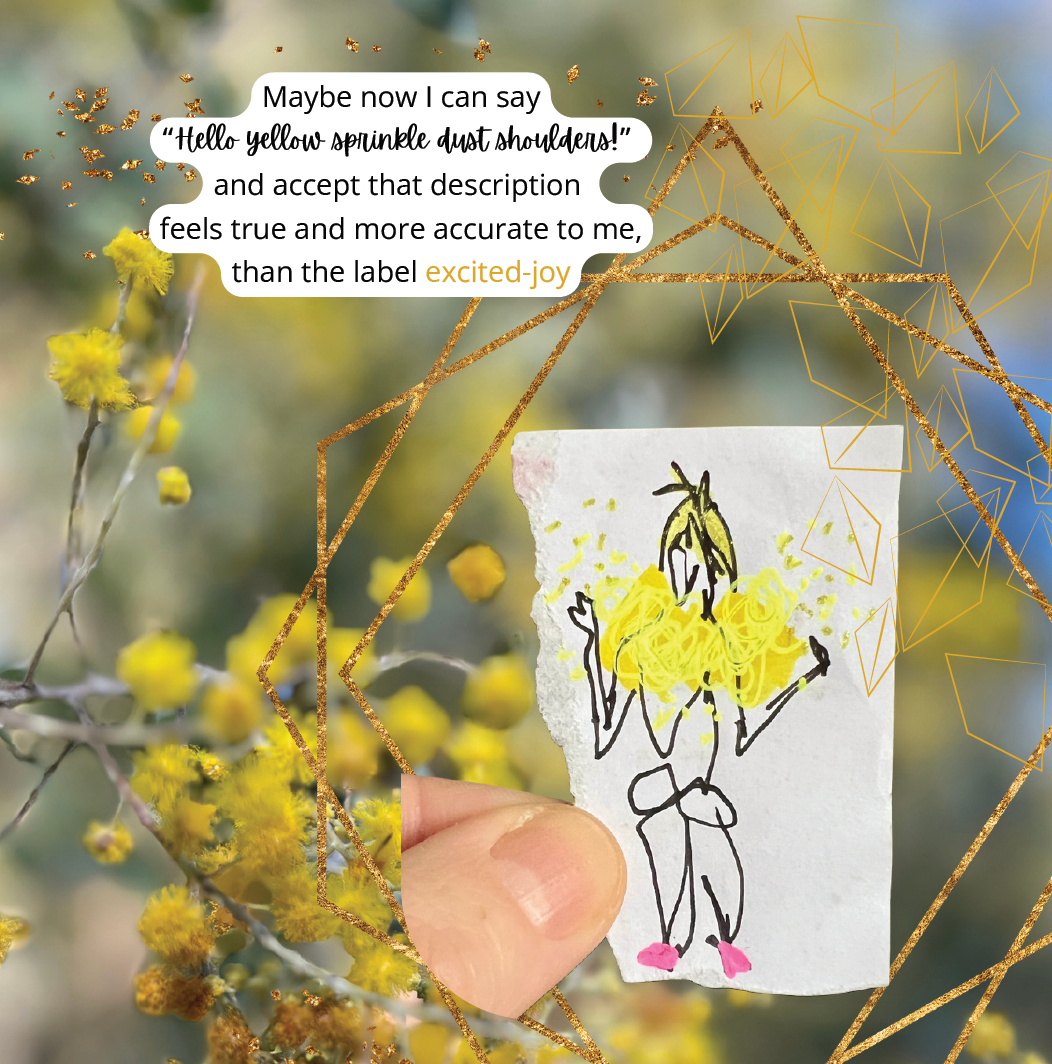
Alexithymia poetics from my arts-based research
🙏 3. Mindful Touch 🤲🏽
We’re often so rushed in our daily experince that we don’t even notice we’re almost always in physical touch with something - whether that be the texture of clothes on our skin, fingers on a keyboard, or water washing over our hands.
Our sense of touch can include any object touching our skin, or even sensations happening inside our body (also called ‘interoception’). The sensation of touch can also be strongly related to Consent (Betty Martin’s ‘Wheel of Consent’ work is excellent to dive deeper into mindful touch).
What textures do you like to feel on your skin? Do you enjoy smooth, slippery, chalky, squishy, or rough? Do different parts of your body experience different levels of pressure, like soft tickles on your palm, or firm pressure on your chest? When you feel a pleasurable texture, does it feel expansive or retractive in your tummy? Do you experience goosebumps in response to enjoying a certain texture or pressure? These prompts can help us discern which kinds of touch are helpful for us to experience calm or enjoyable states.
Alternatively, pain can be a way to alert our senses to something being uncomfortable, misaligned or dangerous. We will likely experience pain when we kick our toe, or experience cramps when our tummy is upset. For some autistic people, pain receptors can be hyposensitive, meaning pain may not register as a strong sensation until it’s at extreme levels. We can also be hypersensitive, so the experience of certain textures can feel dialled up to our nervous system.
Exploring different textures and qualities of pressure, when we are by ourselves, can help us connect with our touch preferences in a safe space.
I find art supplies give me great feedback about what textures I prefer and dislike, such as the lovely sliding feeling of a brush over a clean surface, pushing a smooth rock over a page with a pencil (below) 👍 or the icky chalky residue left on my hands as clay dries 👎

From my journal: Drawing around a rock
🫐 4. Mindful Tasting 🍉
Most of us are pretty aware of which foods we like and dislike. To deepen our mindful awareness of taste, we can explore slowing down and savouring our eating experiences, or bringing more mindfulness into our food preparation to deepen our relationship with self-nourishment.
For example, when drinking a glass of water, do we chug it down to quickly finish the task before moving on, or can we take a moment to tune into the unique flavour of water on our tastebuds? Where does a food register on your taste buds? What happens on your tongue when you experience something sweet, or sour?
When preparing food, can we bring a mindful moment to the chain of labour that went into each ingredient, from nature to workers to table?
Can we allow that piece of chocolate to melt slowly on our tongue and truly enjoy the nourishment we consume? How might mindful tasting enrich our everyday experiences with eating and sense of taste?
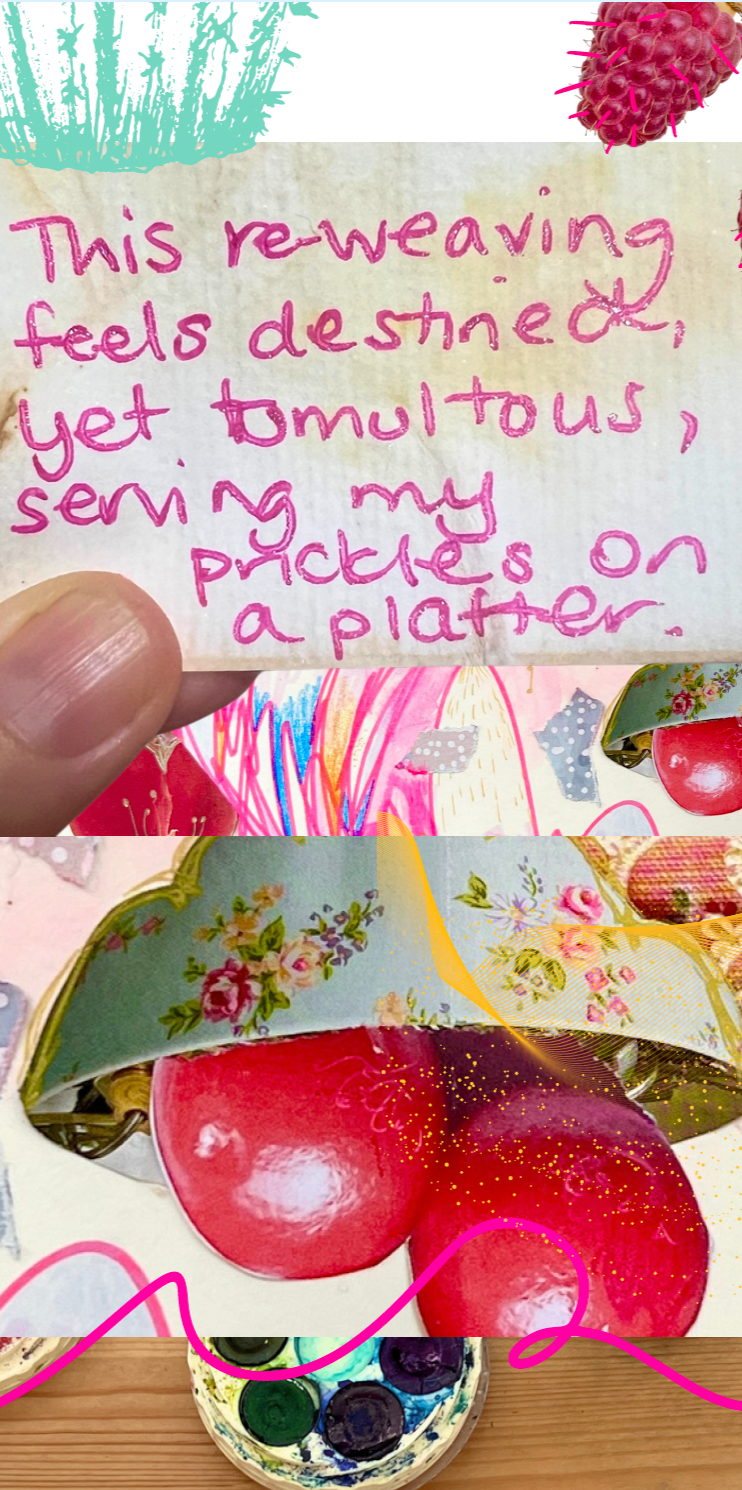
Pickled platter image exploring perimenopause, from my arts based research
👃🏽5. Mindful Smelling💨
Of all the senses, many of us can easily identify which smells register as divinely lush or downright stinky. The smells we encounter in our environment can be simple, yet powerful ways to impact our sense of comfort.
For me personally, I have fairly low smell receptivity, so I seek strong scents that give me pleasurable feedback. It also means I can feel headachey from overpowering smells, before I’ve registered they’re there.
To smell mindfully, notice: Are there certain smells that make your mouth water in resonance? Does the smell of a roast dinner make your tummy grumble, or a soft waft of patchouli make your chest and tummy soften? Do some chemical smells give you a headache, so natural products might be more appropriate?
Intentionally bringing uplifting, grounding or pleasurable scents into our home and environments can bring a simple sense of familiarity and ease to our experience.
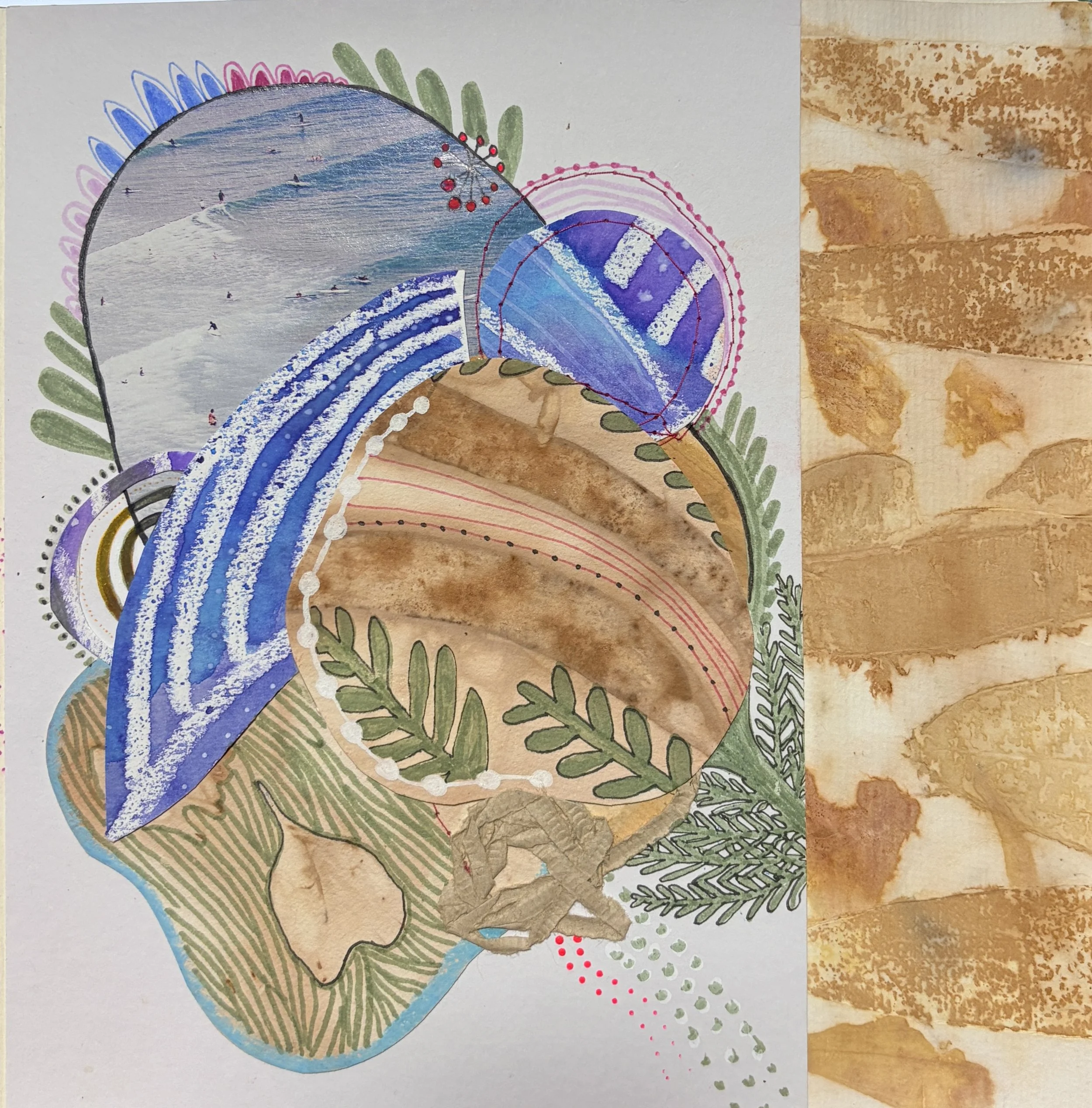
How Our senses can help us Deepen our wellbeing
When we deepen our relationship with our senses, we get better at articulating what we like and don’t like.
We can help curate our environments to support our mental and emotional wellbeing, by increasingthe sensory sights, scents, sounds, tastes and textures that feel deeply pleasurable within ourselves - and reducing overpowering sensory stimulus.
Something as simple as introducing a calming candle, beautiful rug and soft music in our environment can signal to our parasympathetic nervous system that it’s likely safe enough to relax, promoting our "rest-and-digest" functions.
Creating a deep and meaningful life requires time to notice and nurture the structure of our unique sensing body, so we can craft tailor-made choices and intentions to accommodate our sensory needs.
We have this body for a lifetime … why not take time to get to know your sensory profile?
A simple 30 second mindful Sensing Experience:
Consider or write down: What is one mindful sensory experience you can focus on noticing, or savouring this week, during your everyday routine? E.g. Savouring a mouthful of food at dinner, lighting an incense to enjoy during a shower, tuning into birdsong on your walks…
Wishing you a beautiful time attuning to your sensory needs.
🩷 Chrissy
P.s. If you’d like to deepen your mindful self-discovery via creative ,sensory experiences, check out my Workshops & Events page to join my upcoming offerings.