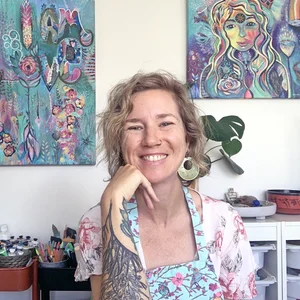
Introducing … Peri-Women-Pause 🌸🐦🔥
Hi Beauties,
I am SO excited to finally share this beautiful gift of creativity I’ve been dreaming up behind-the-scenes … A special offering for over 35’s, currently navigating the challenging, wisdom-filled and alchemical journey of perimenopause …
Peri-Women-Pause:
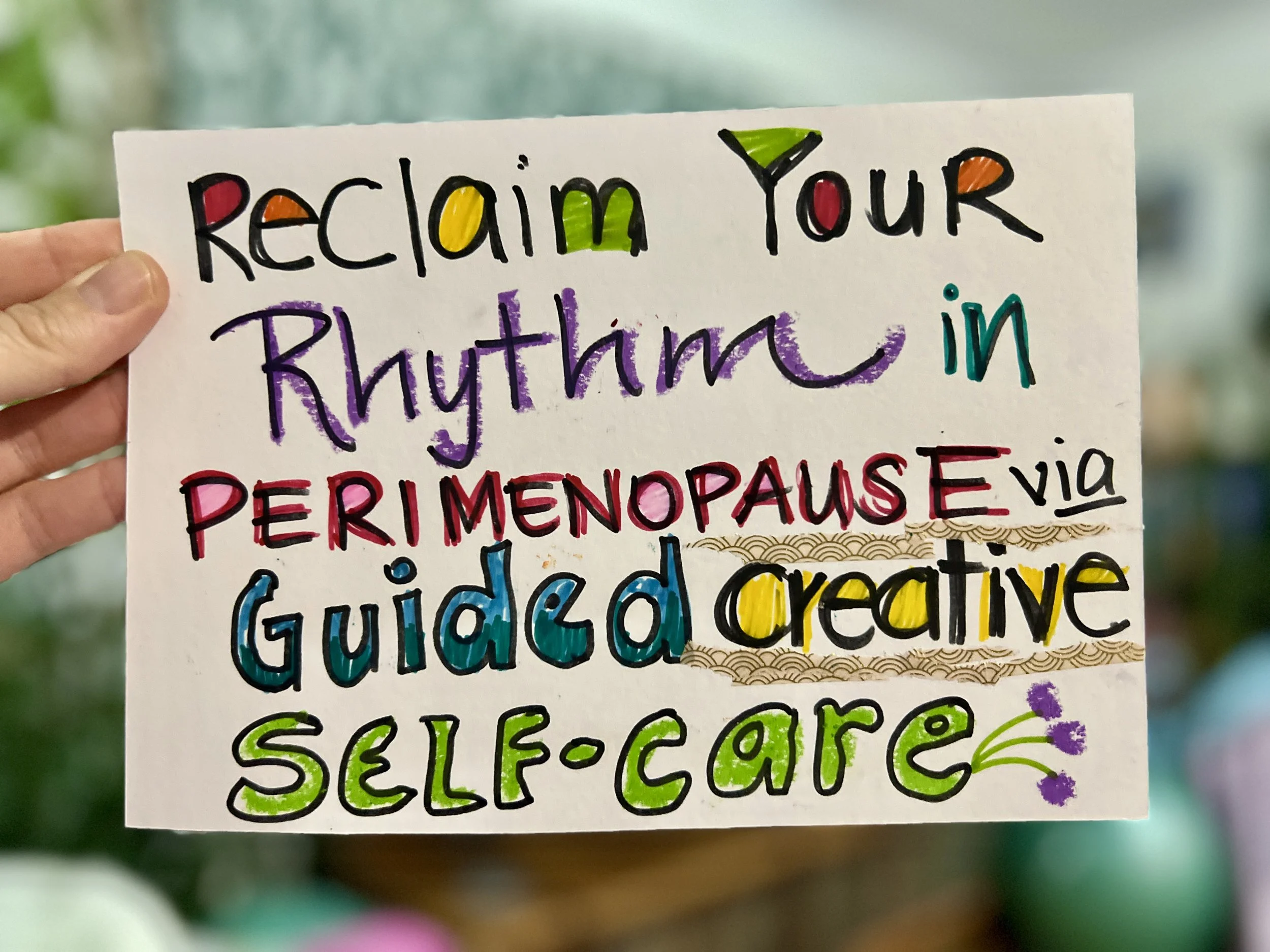
Monthly, Restorative, Online Therapeutic Arts Sessions, designed to nourish your spirit and support your unique peri-path.

What is Peri-Women-Pause (PWP)?
Peri-Women-Pause is a monthly, restorative online experience, thoughtfully designed for perimenopausal people seeking a restful, creative outlet to navigate and process this rich and challenging path together.
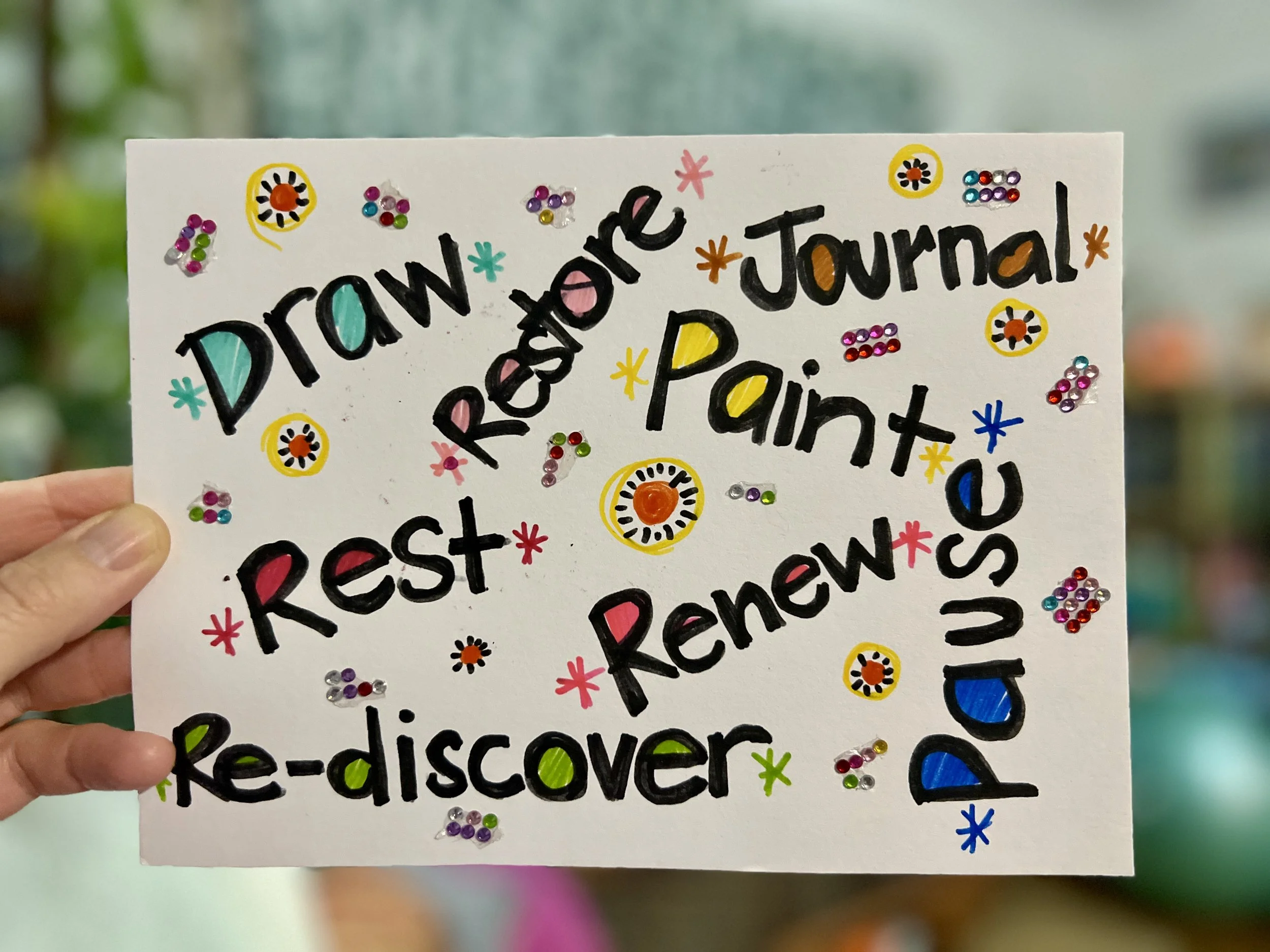
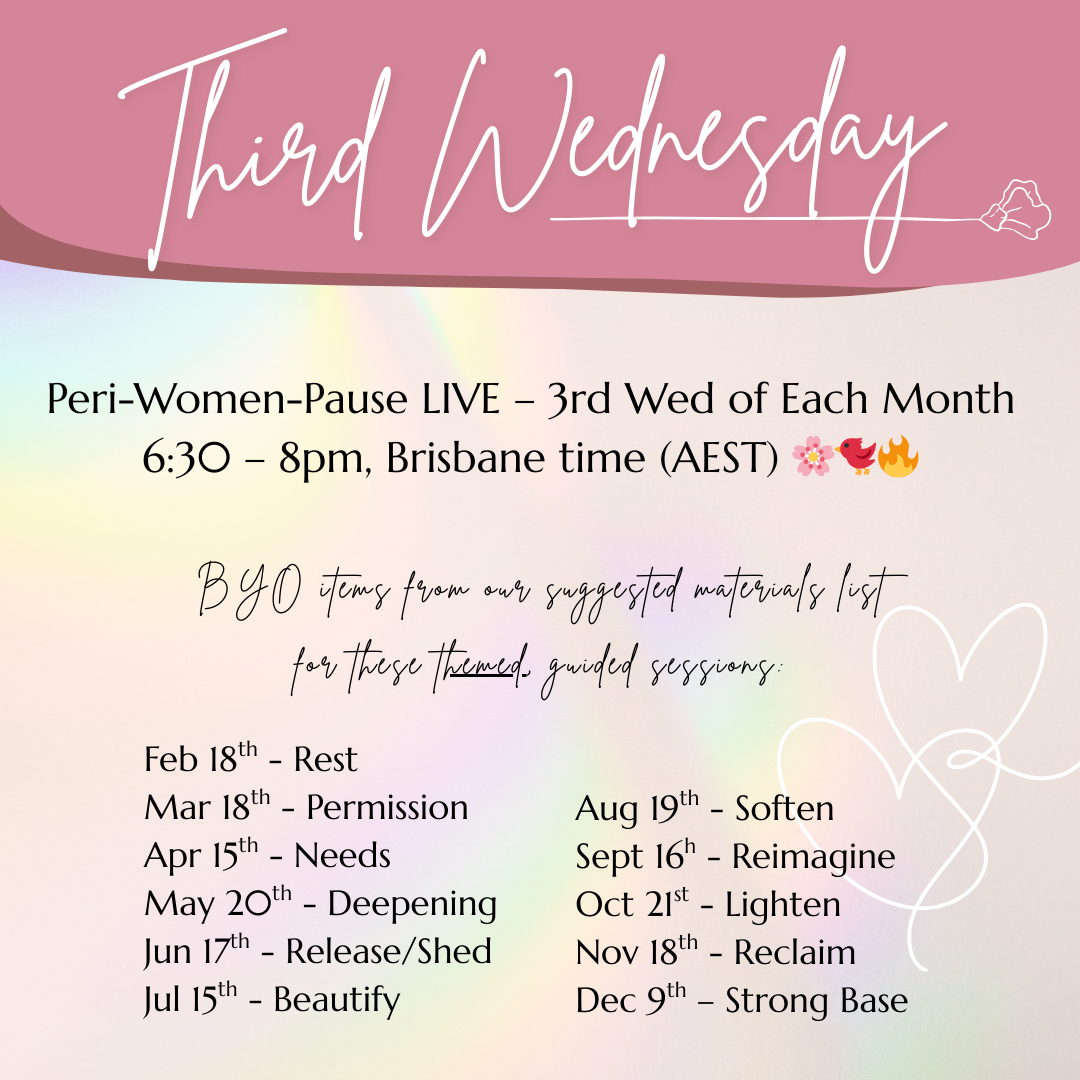
On the third Wednesday night of each month, we gather for restorative, naturally therapeutic arts sessions that blend gentle education, rejuvenating creative experiences and connection, with an online community that shares similar symptoms and challenges.
Every session is gentle, soulful and helps us tune into deeper meaning, as we navigate our shifting capacities and rediscover our inherent needs for thriving.
No art experience necessary - this is a soulful journey where we’re invited to meet ourselves with restful care and integrity, at an honest capacity that genuinely works for us.
I’m so excited to share PWP with you!
What is Peri-menopause?
Perimenopause describes the 7–10 year transition leading up to the final menstrual period (menopause), when hormonal fluctuations in estrogen, progesterone and testosterone can impact various physical, mental and emotional symptoms in women and people with ovaries.
Often called the “Zone of Chaos” (a term popularised by experts like Dr. Mary Claire Haver), perimenopause is often characterised by erratic, wild, and unpredictable hormonal fluctuations, rather than a slow, linear decline. This results in neurological, physical and emotional spikes in in capacity for perimenopausal people, and can often lead to significant challenges to maintain wellbeing and output.
It can also be a time of reckoning - where we get real with who we really are and what boundaries, self-care, relationships and environments we need for genuine, authentic thriving.
Why did I create Peri-Women-Pause?
Within Western, patriarchal and capitalist society, women’s health has been significantly underrepresented. A vast number of people in perimenopause are not getting the understanding, support and research needed to navigate this time of our lives with agency - and many health and medical practitioners are still catching up on new research emerging (if at all).
Since around my mid-40’s, the impacts of perimenopause for me have been significant. Like, burnout-barely-able-to-function significant.
Even as an art therapist with years of therapeutic tools and experience behind me, I’m still going through it and it’s been really tough. Occasionally I have a bounce in my step, as I have some great supports in place. However I still find myself often dredging through mud, barely feeling able to tend to my own needs let alone my family and the worlds’ when I’m beyond fatigued, brain-fogged and navigating pinballs of emotional, physical and mental destabilisation.
In these last few years my output capacity has plummeted and I have to be extremely wise with my choices, time and boundaries.
With such a decreased in output capacity, meaningful and restorative input became crucial. Creativity has been such a lifeline for me to restore, process and make room for my changing experiences … all while I’m sitting on the lounge in my pyjamas.
So, I decided to create a regular space for my fellow peri-kin to gather, share restorative rest, and express ourselves creatively for cathartic nourishment.
This feels like a much-needed offering for us to gather, experience, and reframe the narrative of how we move through perimenopause as an intentional, exhausted, creative collective.
Why is taking ‘pause’ so important for perimenopausal women?
In perimenopause, we undergo a massive process of transformation throughout our mind-body-soul circuitry. An entire overhaul is needed, therefore time to PAUSE is paramount to process, restore and get us through day-to-day. I consider it metaphorically akin to changing our entire operating system from a PC to a Mac.
The big E - Estrogen - isn’t just a reproductive hormone, it greatly impacts our brain’s ability to process in the way we’ve been accustomed to. And when it declines and shifts gears, the impacts can be felt through our whole operating system.
Did you know there are 3 types of estrogen?
Estradiol (E2): The most potent form of estrogen, primarily produced by the ovaries during reproductive years
Estrone (E1): A weaker form of estrogen that becomes the predominant type after menopause. It is produced in fat tissue and the adrenal glands
Estriol (E3): The weakest form of estrogen, mainly produced during pregnancy
Estradiol interacts with neurotransmitters like serotonin and dopamine, which play a big role in regulating our emotional and cognitive responses. As our ovaries slow and stop production of estradiol, which play important roles in the brain like neuroprotection, mood regulation, cognitive function, the growth of new neurons and menstrual cycle regulation; our body then has to shift to other means of meeting these important roles.
With so much change, fatigue and overwhelm can be common in perimenopause, and we can feel like we’re just not ourselves anymore … and this can feel isolating on top of all the physical, mental and emotional symptoms.
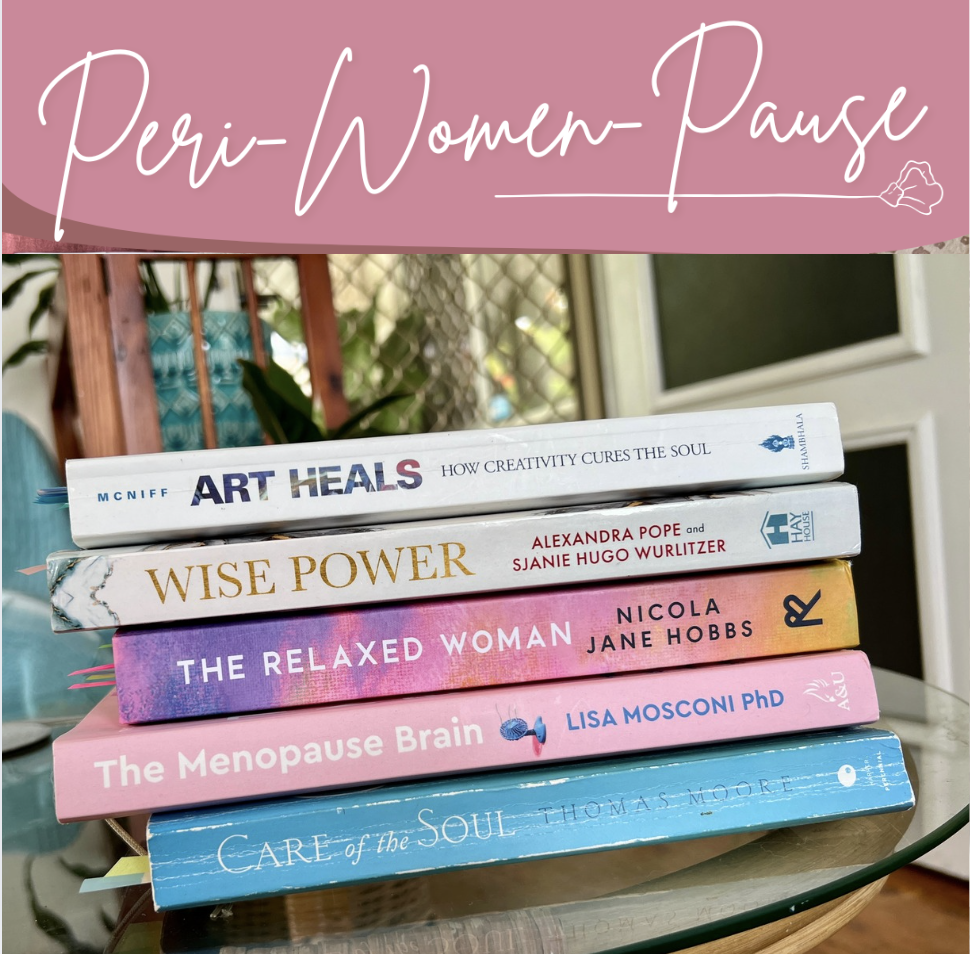
Dr. Mary Claire and Lisa Mosconi PhD both contribute to creating and distributing current research about the scientific and medical supports available for perimenopausal people.
However we need more than just science and medicine. This is an alchemical life transition, not just a chemical, medical one.
Having safe and nourishing experiences and environments, where we can restfully create and restore, and feel understood as we undergo these massive changes, can be crucial in navigating the perimenopausal period, and help us set up self-care rituals for our life in menopause and beyond.
So - in a nutshell - gentle education, regular creative expression and community connection can become a sanctuary to restore our mojo, and experience belonging on your transformative peri-journey🐦🔥💫🎨
With a background and qualifications in Therapeutic Arts, Education and Arts-Based Research, alongside current lived experience, I understand well, how restorative, creative practices can help bridge these gaps in perimenopause and help us carve out regular time to restore our needs, via gentle, restful experiences that help us meet our sensory, emotional, social and creative needs.
A Perfect Storm: A special note on the Intersectionality of Perimenopause and Neurodivergence
As a late-diagnosed autistic-ADHD woman, it’s important to share some current research on how the overlaps between perimenopause and neurodivergence can significantly impact our wellness capacity, during this transitional phase.
Many autistic women, myself included, experience heightened symptom intensity due to the overlap of perimenopausal and neurodivergent symptoms.
Anxiety and depression, fatigue, mood swings, and poor memory are common aspects of the neurodivergent lived experience, often accompanied by various intersecting chronic health conditions.
During perimenopause, when hormone levels are fluctuating and declining, pre-existing neurodivergent symptoms can compound to a breaking point, making it a ‘Perfect Storm’ of overwhelming proportions (see this great article: “A Perfect Storm”: Autistic Experiences of Menopause and Midlife HERE)
Recent research has tracked the overlapping symptoms of menopause and neurodivergence in women across several different countries, revealing that out of 19 menopause symptoms, 16 may already be present in Autistic and ADHD womens’ lived experience (See this fantastic article HERE).
This helps partially explain why so many women receive an unexpected late diagnosis of ADHD and Autism during perimenopause; our masking and coping strategies become less effective or non-existent due to the significant cognitive, emotional, social, mental and spiritual impacts of perimenopausal change.
Regardless of whether you’re diagnosed neurodivergent or not, this transition can be incredibly challenging, as we reframe our entire experience through a new mind-body-soul lens. We need education, community and understanding to navigate the threshold … alongside creative, restorative practices that help us bolster and alchemise these shifts.
As a late diagnosed Autistic-ADHD arts therapist and arts-based researcher, currently in perimenopause myself, I bridge lived experience across these areas, making me uniquely positioned to gather, design and share restorative creative practices that help us ease-fully refuel, with permission and understanding for tired, soulful women. For this reason, I include neuro-affirming accommodations in all my offerings including Peri-Women-Pause, so that we can all access meaningful support, learn from one another and deepen our understanding for diverse lived experiences.
When you join PWP, we navigate this complex journey together - meeting in whatever capacity we can muster on the night. Unmasked, and supporting ourselves and each other with integrity, together, we slowly shed the old, rest and rise, awakened and anew 🌸🐦🔥💗 And I for one, am up for the brutiful, wisdom-filled journey as this deep, rich time of life unfolds before me.
I hope to see you in an upcoming PWP experience soon.
With love
Chrissy