The Art of Shedding: Nature’s Cyclic transformation

Change and personal growth can feel uncomfortable, especially when old habits don’t fit the new you. During transitions we may feel vulnerable, unsettled, de-regulated, scared and less able to cope.
Nature’s creativity offers us models: Like us, many creatures shed what restricts them to grow … and as part of nature, we can learn from these processes to guide our own change.
Table of Contents
Shedding in Nature
In the natural world, we can find magnificent range of creative approaches to shedding the old, to make way for health, wellbeing, and new cycles ahead.
Let’s explore how and why different beings in nature shed, and perhaps notice which of these feel resonant with your own life experience.
Natural shedding examples
Trees shedding their leaves in Autumn to conserve energy for the cold winter
Snakes shed their skin to grow and remove parasites. This process is called ecdysis.
Birds molt feathers to replace worn-out ones and maintain flight efficiency. This occurs annually or biannually.
Crabs shed their exoskeleton to grow and allow for a larger body size.
Many lizards shed their skin periodically to remove parasites and promote growth.
Frogs often shed their outer layer to keep skinmoist and healthy and maintain optimal respiration and hydration.
Insects like caterpillars shed/molt multiple times before becoming butterflies. Each stage allows for growth and development.
Male deer shed their antlers annually, which is influenced by hormonal changes and helps in regrowth.
Turtles slowly shed their scutes (shell plates) to maintain a healthy shell over time.
Rabbits shed fur seasonally to adapt to temperature changes and stay comfortable in varying climates.
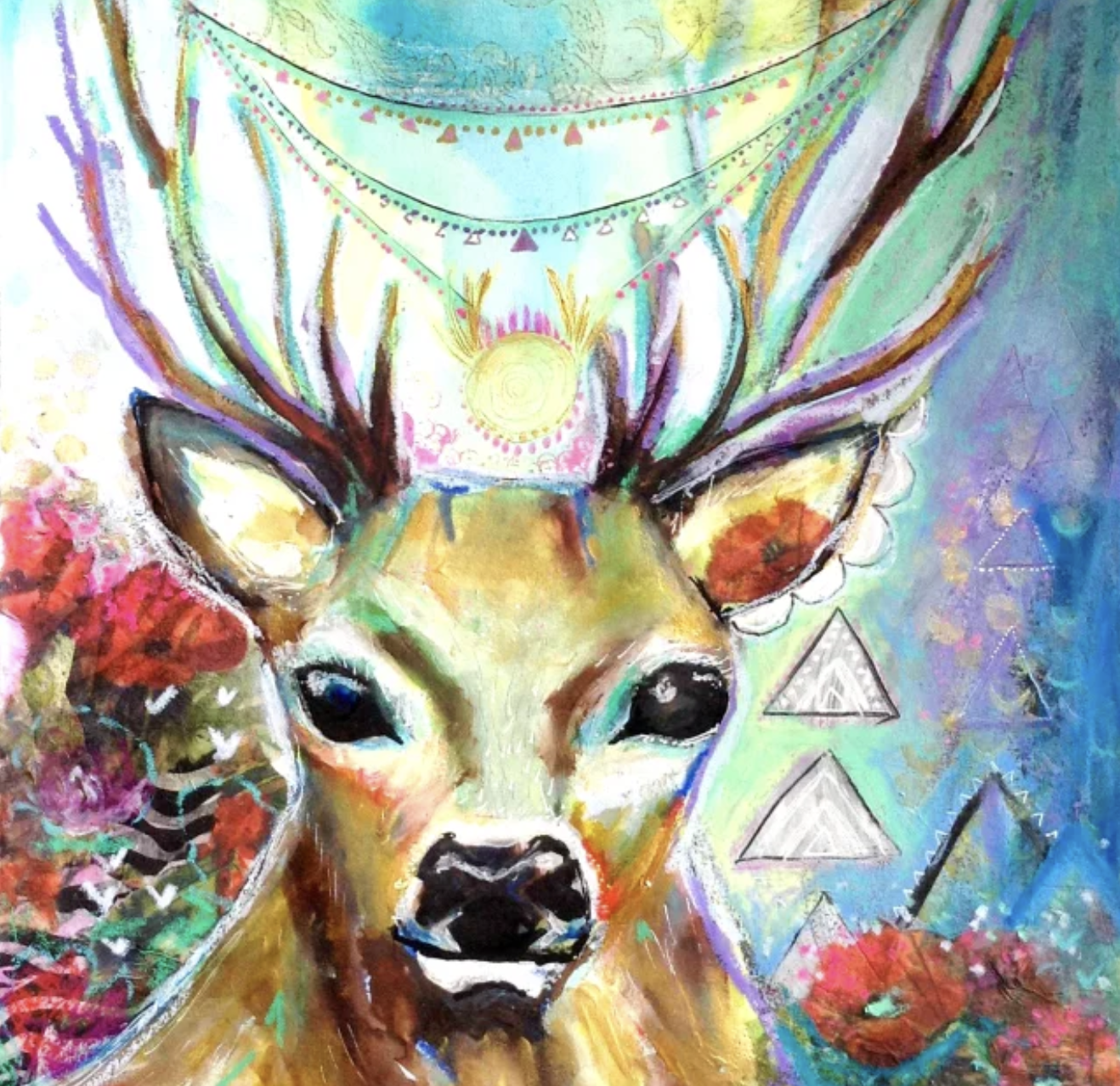
Image: Grace Art Print HERE
What Do We Shed As Humans?
As humans, we naturally shed to grow, heal and renew, sometimes without even knowing it, other times we’re highly aware of a challenging transformation occurring within us.
Over the span of 7-10 years, a large majority of the cells in our body are shed and replaced with new ones, including our skin and hair, the internal lining of our mouth, airways and digestive tract, and our womb lining, to name a few.
Menstrual shedding & perimenopause
Most naturally menstruating folx cyclically shed the lining of our wombs approximately every month, although timing can be very different between individuals and our life phases. For some, the menstrual cycle can bring significant emotional, cognitive shifts and capacity shifts and for others, shedding happens without much fuss.
We may notice that the last quarter our cycle - in the luteal phase - we also shed our output capacity. At this time, our body’s hormones shift and we becomes more sensorially ‘porous’, ready to rest on our bleed (in an ideal world!)
Each month, we can track how our menstrual bleeds transform us emotionally, cognitively, creatively and spiritually, making a deeper connection with our recurring seasons, helping us predict our capacity across our cycle.
Then, as we reach perimenopause, we meet even deeper layers of shedding. With an overarching decline of certain hormones, our cyclic rhythms become more haphazard and chaotic.
This ‘zone of chaos” can feel awkward, liminal and unsettling, impacting each of us uniquely, lasting anywhere from 7–10 years in lead-up to menopause.
These changes can cause major physical and mental health disruptions for people who menstruate - but also a shedding of what no longer serves us (including people, jobs, beliefs, hobbies + more), as we navigate the world with heightened sensitivities and less capacity to mask.
For neurodivergent people—Autistic folks, people with ADHD, and trauma survivors—this change can be harder because their brains may be more affected when important chemicals drop (speaking from experience).
This calls for a multi-allied approach to bolster our capacity and processing, in this time of great shedding.
It’s where spiritual, creative endeavours, community, and rites of passage can become more important, to help midwife us safely through our transformation.
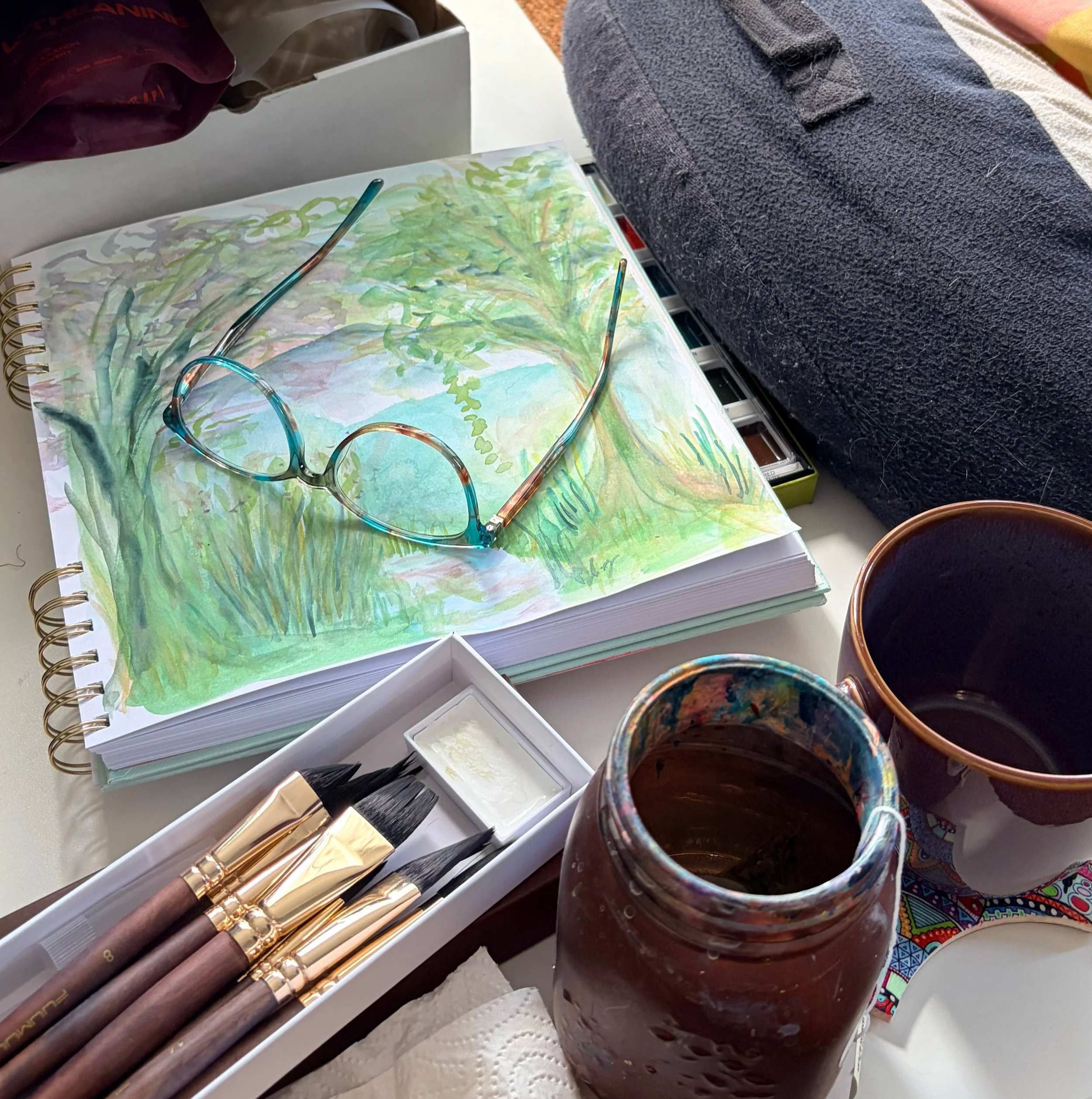
Image: In my journal - A tranquil place to restore
Help in the chaos zone: Shedding Allies
As an Autistic and ADHD artist, arts therapist, and soulful educator currently deep in the throes of experiencing (and researching) perimenopausal shedding myself, here are some of the ways I’ve found helpful to support the big transition of perimenopause, however many are applicable across various domains of life.
Social Allies
In times of transformation, many of us instinctually turn to others for help: Those who care, those who help, those who have similar lived experience, those who have come through the other side — these are the people who can remind us who we are and who we’re becoming.
Reaching out to safe family and friends, finding aligned professional expertise (read: non-gaslighty!), or joining a community group based on your interests and experiences (either in person or online), can all be much needed lifelines to be feeling supported during life transitions.
Cognitive Allies
When I first hit perimenopause, I thought I might be in the early stages of dementia, with significant brain fog, working memory loss, inability to retrieve words and constantly losing things. Turns out, like many neurodivergent folx in perimenopause, my existing, overlapping ADHD executive functioning challenges became dialled up, due to the shedding of hormones needed for optimal cognitive function.
Some tips to help bolster cognitive challenges during perimenopause can be to use calendars, whiteboards, reminder apps and routines to reduce cognitive load. You can also ‘habit stack’ (add a new helpful habit to an existing one, like listening to calming meditation prior to bedtime) or ‘body double’ with a loved one to undertake tasks alongside one another, for company and accountability.
Body Allies
Meaningful movement and playful exercise (something we enjoy doing, like yoga or bushwalking or swimming), can help reconnect us with our changing bodies, using gentleness, joy and curiosity, rather than punishment to build strength and resilience in perimenopause.
Somatic therapies can offer gentle, body‑led regulation of symptoms like anxiety, while HRT—when discussed with a trained clinician—can be an effective, evidence‑based option to support hormonal balance, alongside movement and therapeutic practices.
Creative Allies
A return to creativity is a natural remedy people use in times of great transition, and perimenopause is no exception. Engaging in creative expression - from crocheting or doodling while watching tv, or attending a weekly clay class, is a way for our minds and hands to process in non-linear ways, and bring back a sense of agency and pleasure within the challenges of big transformations.
If you’re returning to creativity after years of decades of hiatus, you might like to re-engage in creative experiences you enjoyed as a child. Reigniting our lifelong passions can feel both cathartic and uplifting, whilst creating joyful, restorative pathways in our brains, and resource ourselves during change.
Spiritual Allies
When shit hits the fan and we dive to the depths of ourselves, re-igniting trust in a higher, benevolent force that created and holds us, can bring much needed trust and hope during tumultuous times.
Spirituality needn't be about religion — it can be a quiet leaning into being held by a universe with billions of years of cyclical, rhythmic up-levelling, alongside an awareness that our human and non-human ancestors, over generations and eons, have woven the world that sustains us now.
Spirituality can also mean rites of passage, age-old practices and rituals guided by elders to support the process and transition of shedding and new growth.
Writing a letter to your future self asking for guidance, or creating a simple, reverent offering to nature, can be ways we nourish ourselves through intimate connection with the creative force running through all being, uniting us as we rise, fall and transform anew, in our own unique timing.
Combining Allies
Combining some of the allies I’ve shared, alongside any other healthy allies you resonate/identify with, can help bolster wellbeing during transformational times.
Enjoying yoga with a friend (body + social), practicing spiritual connection on a nature walk (spiritual + body), joining a journaling group for creative expression (creative + social), can all be ways to habit-stack nourishment and restoration, when we’re feeling overwhelmed and unsure who we are, amongst change.
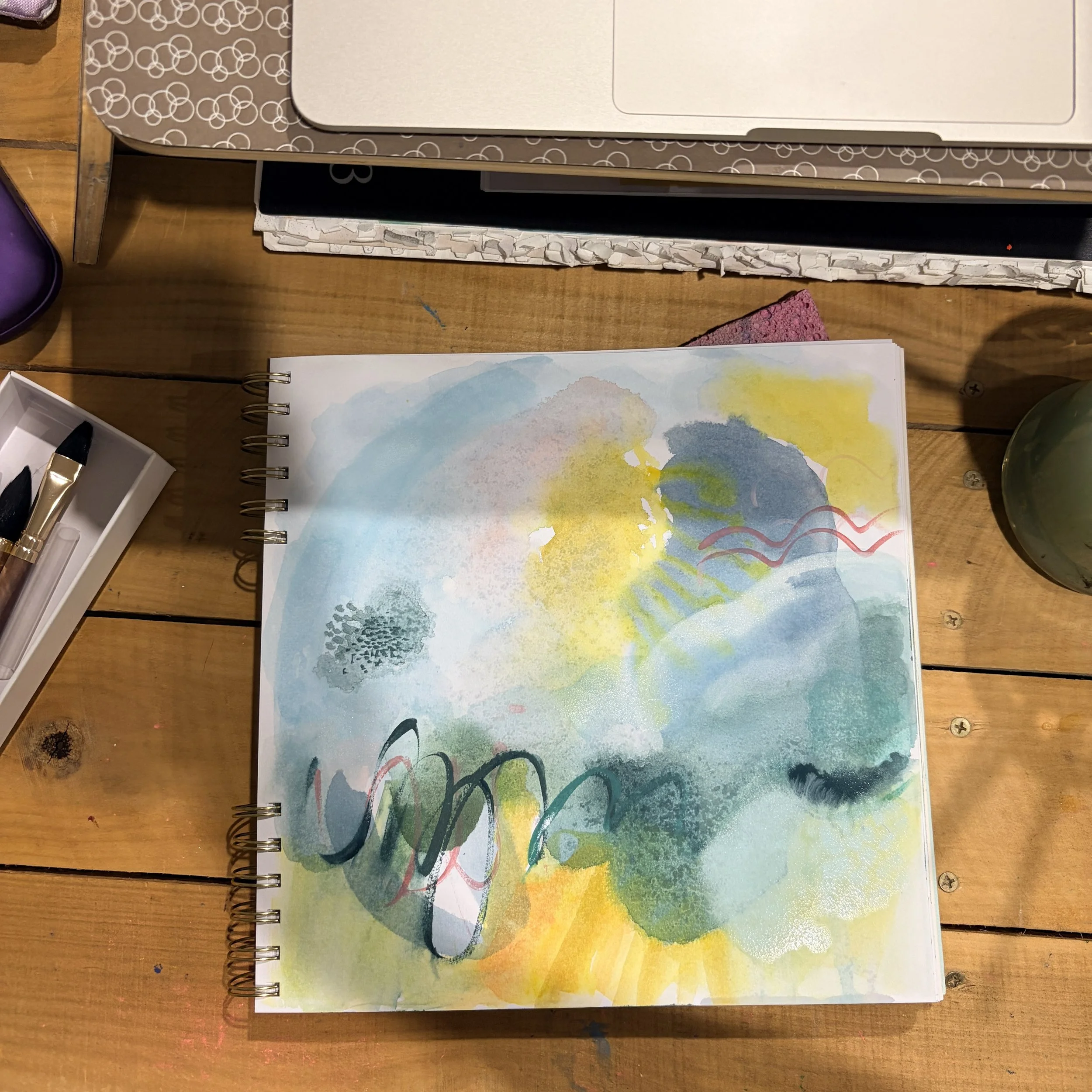
Image: In my journal - Peri Storm Front
Join me in a Creative Shedding Workshop 💫
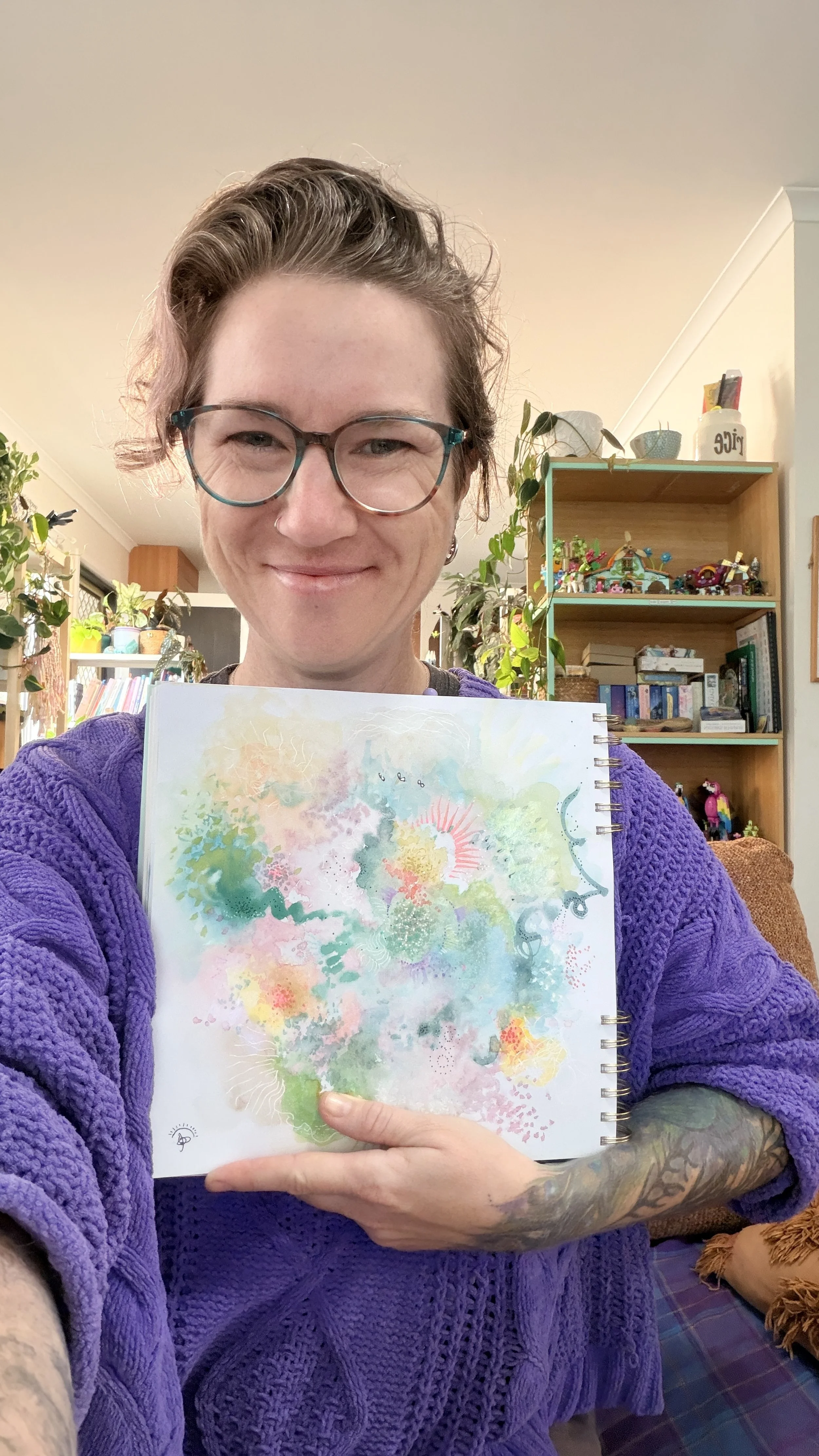
This June in our online Peri-Women-Pause (PWP) workshop, we lean into the lived experience of Shedding, via gentle education and a practical therapeutic arts guided session.
If you’d like to deepen your sense of self-understanding and shared awareness, join our PWP community for monthly restorative sessions to regularly bolster your wellbeing, or join us casually for just this workshop.
We’d love to invite you into our warm, caring, creative fold.
With care and creativity,
Chrissy 💖✨🎨